
Attic rat control and cleanup in Charlotte, NC
Most Charlotte rat calls are attic calls, and there is a good reason for it. This city sits in strong roof rat territory, and the roof rat lives high. It climbs willow oak limbs, fence tops, downspouts, and utility drops, gets onto the roof, and works the soffit line until something gives. Once it is above your ceiling it has insulation to nest in, a warm cavity, and no predators. It has no reason to leave.
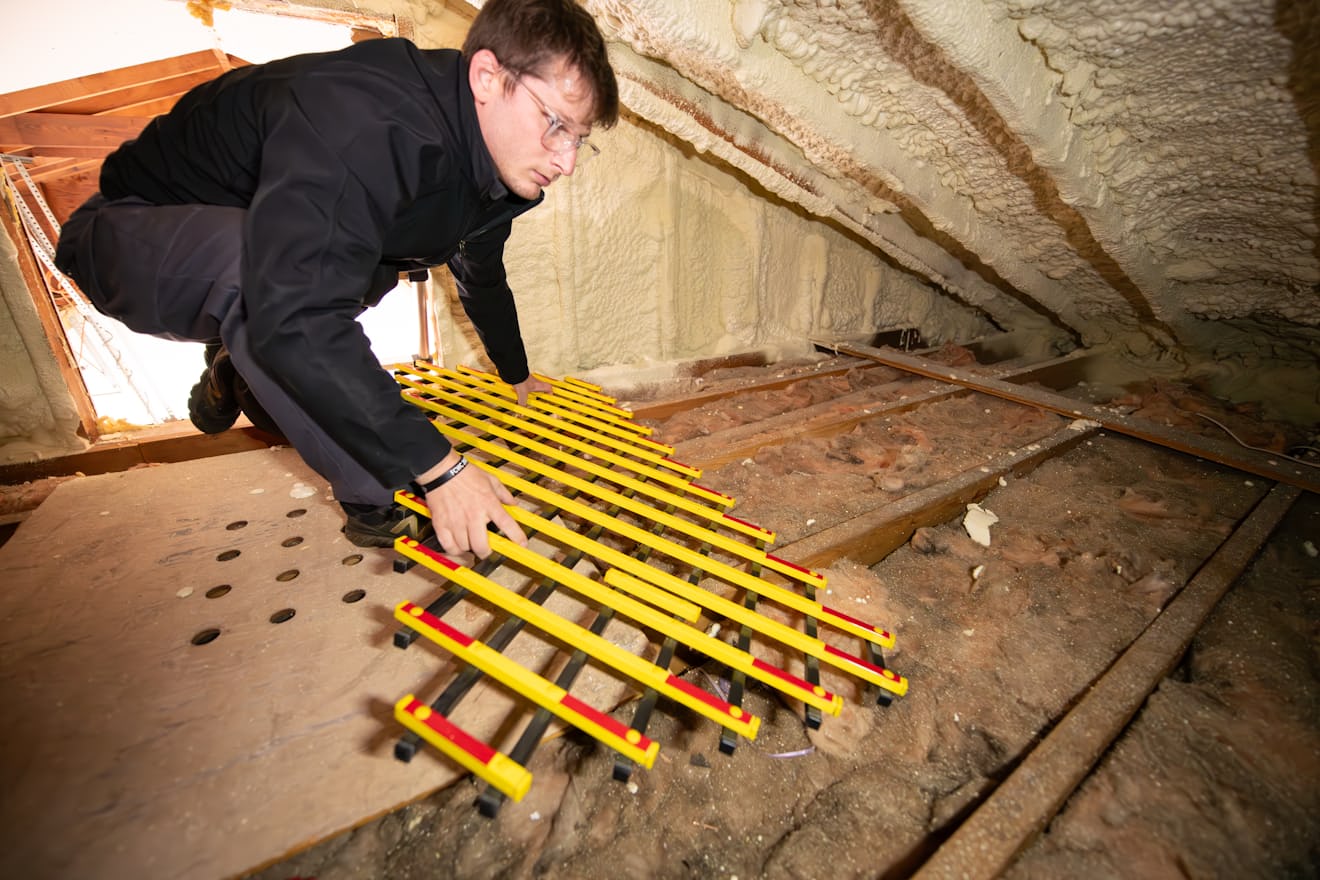
Attic rat control is the full version of that job: get the animals out, take out what they contaminated, treat the space, and close the roofline behind them. Doing only the first step is why some houses have the same problem every autumn.
How rats get above a Charlotte ceiling
The route is almost always the same. Canopy or a fence to the roof, then along the roof edge, then in at one of a short list of weak points:
- Soffit returns. The boxed corner where a sloped roof dies into a wall. On brick homes there is frequently an unsealed gap behind it, and it is the most common roof rat door in this city.
- Fascia and drip edge gaps. Where fascia has pulled or rotted, the space above the wall top plate opens directly into the attic.
- Gable and turbine vents. Rusted screens, cracked louvers, and lifted turbine bases.
- Roof-to-wall seams. Where a porch or garage roof ties into a second story.
- Old squirrel holes. Last year's unrepaired opening, now rat-sized.
- Uncapped chimney chases. Open chase tops on prefabricated fireplaces.
The tree-shaded older neighborhoods produce the highest volume of these calls. Dilworth, Myers Park, Elizabeth, Eastover, Cotswold, Sedgefield, and Madison Park all combine mature canopy with deep eaves and a lot of soffit returns. Newer slab-built areas like Ballantyne and Highland Creek get attic rats too, but the entry usually comes through the garage ceiling line or an unsealed HVAC chase rather than off a limb.
What rats do to an attic
- Insulation. Batts get shredded for nesting and blown cellulose gets tunnelled and matted. Both lose R-value and both hold urine.
- Wiring. Rats gnaw constantly because their incisors never stop growing. Chewed wire insulation in a dry attic is a real fire risk.
- HVAC flex duct. Holes chewed into flex duct dump conditioned air into the attic and quietly raise a power bill for months.
- Stored belongings. Boxes, holiday decorations, and photographs get chewed and soiled.
- Air quality. Droppings and urine accumulate in a space that often shares air paths with living areas.
- Odor. Urine builds a sharp ammonia note that does not fade while the material stays in place.
The scent trail problem: rats mark their routes with urine, and those pheromone trails survive the animals. An attic that has been cleared but not cleaned is still advertising itself to the next rat working the block.
The order the work has to happen in
- Inspect and map. Entry points on the roofline, runways along the joists, nesting areas, insulation condition, and the extent of gnaw damage. Species confirmed, because roof rats and Norway rats behave differently even in the same attic.
- Trap the population out. Lines on the joist runways and at the entry point. See rat trapping for how placement works.
- Confirm it is quiet. Two consecutive checks with no catch and no fresh sign. Cleanup before this point wastes the cleanup.
- Remove the contaminated material. Soiled batts pulled, heavily fouled blown insulation vacuumed out, nesting debris and droppings bagged and taken away.
- Treat the space. Deck, framing, and top plates cleaned and treated to break down urine residue and neutralize the scent trails.
- Repair and reinsulate. Chewed duct and damaged wire flagged for repair, then insulation restored to a proper depth so the attic performs again.
- Close the roofline. Hardware cloth, sheet metal, and correct vent covers on every marked opening, with ventilation preserved. See prevention and exclusion.
Rats or squirrels? Check the clock
This matters because the work differs. Squirrels are diurnal. They are loudest at first light and again mid-morning, they sound heavier, and the movement is slower with distinct thumps. Rats are crepuscular and nocturnal. They start after dusk, peak in the small hours, and run again before dawn, and the sound is faster and lighter with periodic dragging as nest material moves. Droppings settle it: squirrel droppings are rounder and larger, rat droppings are elongated pellets dropped along a travel line.
Charlotte conditions that keep attics occupied
Two things work against homeowners here. The first is canopy. This is a heavily treed city, and the same mature oaks that make the older neighborhoods pleasant put limbs within a foot or two of hundreds of rooflines. Trimming those limbs back several feet is one of the highest-value preventive changes available.
The second is climate. Charlotte winters are mild, with short freezes rather than sustained cold, so an attic population does not get knocked back over the winter the way it would further north. It keeps breeding in a warm, insulated space through January. Add humid summers that rot fascia and soffit trim, and new openings appear on their own schedule.
Health note
Rodent droppings and urine carry pathogens, and dried material disturbed by air movement can become airborne. Cleanup work should involve proper respiratory protection rather than a shop vac and a dust mask. The CDC page on rodents covers the general risks and the cleaning precautions in plain terms.
Start with a phone call
Describe when you hear the noise, where it is loudest, and what you have found. That is usually enough to tell whether you are dealing with roof rats, Norway rats, or squirrels, and whether the job is trapping only or trapping plus insulation work. Attic work runs across Charlotte and Mecklenburg County, including Matthews, Cornelius, Davidson, and Huntersville. If the smell has already started, see dead rat removal.