
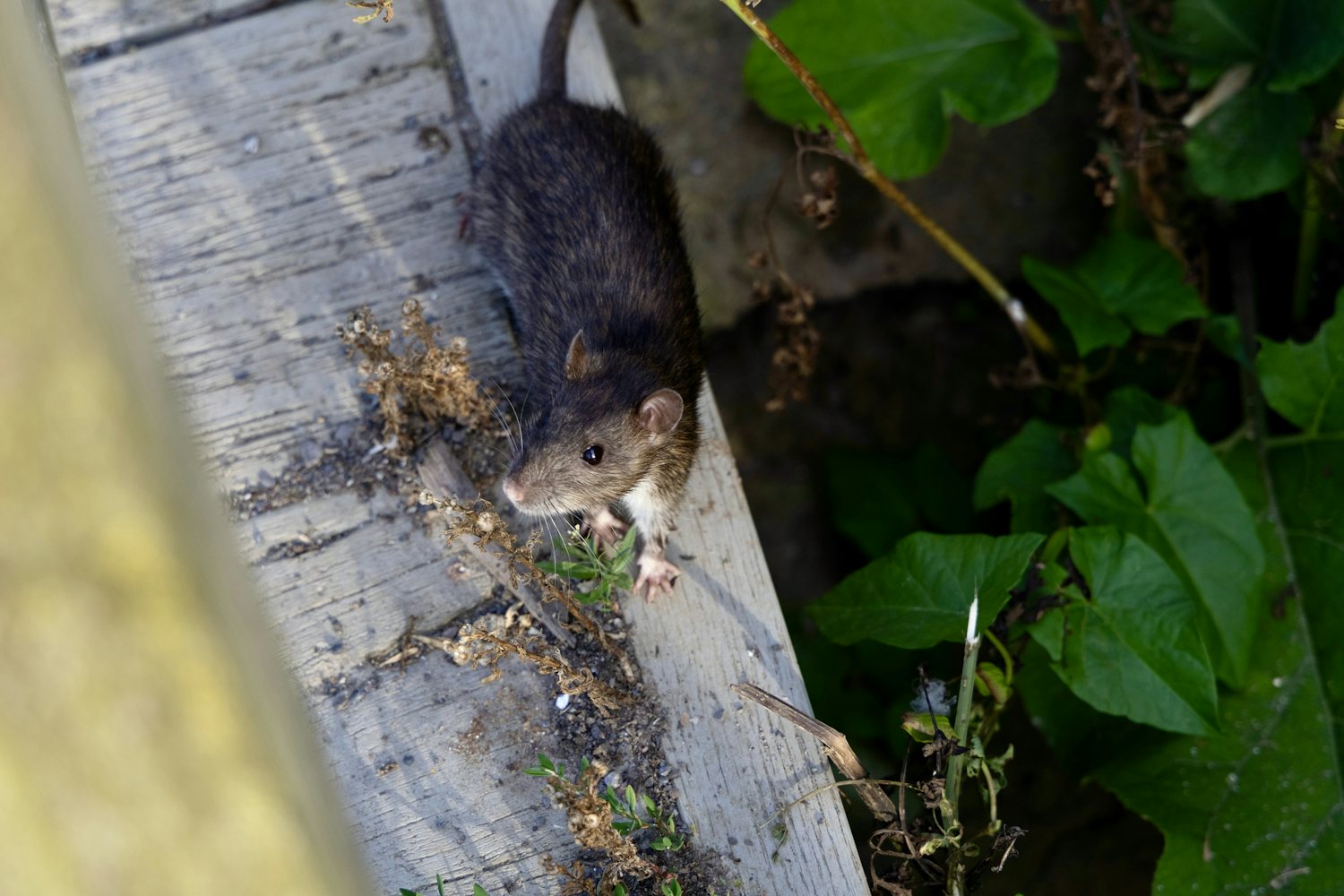
Rat trapping in Charlotte, NC
Trapping is the backbone of honest rat work. It produces a countable result, it keeps the dead animal out of your walls, and it tells you in real numbers whether the population is dropping. Rat trapping in Charlotte comes down to one skill that has nothing to do with the trap itself: reading the building well enough to know exactly where a rat will walk tonight.
That is why store-bought traps so often catch nothing. The hardware is fine. The placement is wrong.
Rats run routes, and the routes are visible
A rat is a cautious animal that survives by predictability. Once it finds a safe path between a nest and water, it uses that path every night, hugging structure the whole way. Over a couple of weeks the path marks itself:
- Grease and dust lines along attic joists, the top plate of walls, pipe runs, and duct boots.
- Rub marks where the animal squeezes past a pier, a stud, or a duct in a crawl space.
- Smoothed soil or flattened vapor barrier under the house.
- Droppings in a line rather than scattered, which marks the travel lane instead of the nest.
- Tracks in dust across sheathing and stored boxes.
A trap set across that line, with the trigger in the path and the trap body flush to the structure, catches rats within a night or two. The same trap two feet out in the open may sit untouched for a week.
Trap discipline that raises the catch rate
- Set flush to structure. Rats travel with a shoulder against something. Traps go against joists, walls, and pipe runs, never floating.
- Trigger across the path, not parallel to it, so the animal walks into it rather than around it.
- Double up in pairs at high-traffic points, because a rat that clears one often steps into the second.
- Handle new-object caution. Rats avoid novelty for a few nights. Pre-baiting unset traps for a night or two can lift the catch rate sharply on a wary population.
- Bait to the species. Roof rats lean toward nuts, seed, and fruit. Norway rats lean toward protein and grain. In cold weather, nesting material can out-pull food.
- Never scatter and forget. Unchecked traps hold decaying animals and turn a trapping job into an odor job.
Why trapping over bait alone: a trapped rat is accounted for and removed. A poisoned rat frequently dies inside a wall cavity or under insulation, which becomes a separate odor job on top of the original problem.
Where trap lines go in Charlotte houses
Older crawl space homes
In Dilworth, Elizabeth, Plaza Midwood, Wesley Heights, and Villa Heights, the 1920s and 1930s housing stock sits on brick piers with vented crawl spaces. Norway rats enter at rusted vent screens, rotted access door corners, and sill gaps, then travel the footing line and the pipe runs. Trap lines follow the perimeter of the crawl space and every burrow entry. Because balloon framing in those houses connects the crawl space to the attic through open wall cavities, both levels often need lines at once.
Tree-shaded homes with attic activity
In Myers Park, Eastover, Cotswold, Sedgefield, and Madison Park, mature willow oaks put limbs near the roof, and roof rats use them. Those calls are attic calls. Lines run along the joist runways, at the soffit return or gable vent where the animal enters, and around the perimeter where insulation meets the top plate.
Slab-built subdivisions
In Ballantyne, Highland Creek, Steele Creek, and University City, slab construction removes the crawl space, so activity concentrates in the garage, the attic, and the wall cavities reached through unsealed plumbing and HVAC chases. Trap lines weight toward the garage perimeter and stored goods, especially where pet food or bird seed is kept in bags.
Creek and greenway edges
Lots backing Little Sugar Creek, Briar Creek, Irwin Creek, or McAlpine Creek face a permanent outdoor Norway rat population. Trapping there works, but it has to be paired with exterior burrow work and real exclusion, or the line just keeps catching new arrivals indefinitely. See prevention and exclusion.
How the trapping phase runs
- Read and map. Full inspection, species identified, runways and entry points marked.
- Set the line. Traps placed on the map, flush to structure, triggers across the path, with pet and child constraints applied.
- Check every few days. Clear catches, log counts, and move underperforming placements toward fresh sign.
- Watch the curve. A healthy line catches early and heavy, then tapers. A flat line means the placements are wrong, not that the house is empty.
- Confirm quiet. Two consecutive checks with no catch and no fresh droppings or gnawing.
- Seal and clean. Only after the catch stops. Exclusion first, then cleanup of nesting material and fouled insulation.
What trapping will not do by itself
Trapping empties the building. It does not close the hole, and it does not remove the scent trail in the insulation that tells the next rat this was a good address. That is why a finished job always ends with exclusion and, where there was real nesting, attic cleanup. If the population has already spread through several parts of the house, the right starting scope is infestation treatment rather than a single line.
Trapping runs across Charlotte and Mecklenburg County, including Matthews, Mint Hill, Pineville, Huntersville, and Davidson. Call and describe what you are hearing, and you get an honest read on how long a line should need to run.